
Helpful Hints
Welcome Home
One of the first mistakes many people make after bringing new plants home, be it shipped from a greenhouse far away or the local supermarket, is to immediately repot them. This is not a good practice! Plants need a chance to adjust to new surroundings, light, temperatures, humidity, any change in condition before attempting to repot. A good rule of thumb is to wait 4 weeks before repotting. When you are ready, refer to the section on "Potting" for a very important message!
Lighting
 In our greenhouses, plants are bred, propagated, and grown in both natural light and fluorescent light. We find that plants grown under fluorescent lighting tend to have a more vivid color and larger blooms. Variegated foliage is more intensified, too.
Adequate light is very important for abundant bloom. Any window that has strong, bright light is good. Mild direct sunshine is beneficial. Shield violets from hot mid-day sun with sheer curtains. Turn pots ¼ turn every two days to promote even growth, so that your plant does not grow "lopsided." Light intensity decreases sharply as you move away from the light source, so do keep the plants as near the window as possible.
If you do not have good natural light, use fluorescent lights 12 hours a day. Cool white, daylight, or tubes designed specifically for growing plants may be used alone or in combination. Distance from lights depends upon intensity and type of tube as well as variety of plant. A general rule is 12 to 16 inches from top of pot to bottom of light tube for standard growing varieties and 6 to 10 inches for miniature varieties. Light fixtures should be adjustable, to raise or lower to attain desired height.
If plants grow upright with long leaf stems, move them closer to the lights. If they grow too compactly or become hard and brittle, move them further away from the lights. At proper distance (and with proper feeding), plants will be flat, uniform rosettes with many blooms.
Watering
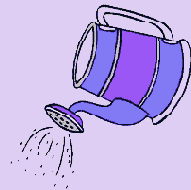 Improper watering is one of the most common reasons for failure of African violets. Always use room-temperature water, watering only when the top of the soil feels slightly dry to the touch. Use water that is fit for drinking. Never use water that has been through a softener. Watering may be from the top or bottom, by wicking, or you may wish to choose one of the many self-watering pots available today. Never allow plants to stand in water after the soil has taken up what it can hold. After 15 to 20 minutes pour off any water that is left in the saucer. Violets do not like wet feet!
About once a month water should be generously run through the pot from the top to flush out accumulating salts. After this is done, put your plants on several layers of newspaper to absorb the excess water, preferably overnight.
Temperature & Humidity
The ideal temperature is 65° to 70°F at night with a 5° to 10° rise during the day. Temperatures below 60°F for any extended period will slow the growth. If it is too high, plants will grow sappy and spindly, with too few blooms, which drop before gaining good size. Better a bit cool than too hot.
The humidity is best around 40% to 60%. Humidifiers are great if you have an unusually dry house. Placing your plants on trays of moist pebbles would be a simple solution. Plants may be misted, but not while exposed to direct sun. African violets do like fresh air but do not like drafts!
Feeding
Many times people ask "Why aren't my violets blooming?" And our first response is "Are you feeding your plants?" Either lack of fertilizer or too infrequent fertilizing is one of the reasons for lack of blossoms, blooms small in size and foliage that is pale or light green. When using soiless mixes, as most growers do today, it is necessary to use a diluted fertilizer solution each time the plant is watered. We recommend using a well-balanced fertilizer such as 15-30-15 at the rate of ¼ teaspoon per gallon of water each and every time you water. Do not think because a little fertilizer makes them bloom nicely, more will make them even better! Excess fertilizer will burn the roots and may cause hard, brittle, foliage.
Potting
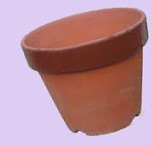 The majority of growers today use "soiless" potting mixes. These mixes are light and porous, providing good drainage and allowing easy root penetration. Violets and most houseplants do well in these mixes. If you do not make your own mix, buy one made for African violets. Avoid heavy mixes, as these have poor drainage and can become compressed and hard, staying wet and eventually rotting the root system of your plant.
The type of pot one uses is purely a matter of preference. We prefer plastic pots, short or squatty type, not tall. To determine the correct pot size for your plant remember this rule of thumb: The plant's diameter should be 3 times the diameter of the pot before potting up to the next size pot. We recommend you do not skip pot sizes. (Do not jump plants from a 2" pot into a 4" pot.)
Grooming
Keep your plants clean! Remove dead leaves and faded blossoms. Just like the knick knacks around your home, plants gather dust. Use a soft brush or soft, damp sponge to gently remove dust and lint. Every 4 to 6 weeks a gentle washing of the leaves using a weak stream of tepid water will make for a happy plant. Remove excess water by patting dry with tissues. Do not expose to direct sunlight or drafts while foliage is wet. Remove "suckers" (those little plantlets that form where the leaf stem is attached to the trunk) before they get big and misshape the plant; except on trailing violets.
How to start a violet leaf
Choose a firm, healthy leaf, for propagation. If the leaves appear limp when they arrive, float them in some room temperature water first to re-hydrate them. (This can be done overnight if needed.) Cut the petiole (leaf stem) diagonally, from front to back, with a sharp razor blade or knife, leaving about a 1 inch stem. This type of cut encourages the plantlets to appear in front of the leaf giving the babies more light for strong growth.
Fill a small pot with rooting mix. A combination or half perlite and half vermiculite works well. You can also use African Violet potting soil, but this should be lightened with perlite. Make a hole in your mix and place the leaf stem so that the rooting mix is up to the bottom of the leaf. Firm the rooting mix around the leaf stem and water gently until the mix is moist. The potted leaf should be placed in a plastic bag to promote humidity. Give your leaf good light, but no direct sun. The leaf may be fertilized with a dilute fertilizer in about three weeks. Once little plants start appearing, cut a few holes into the plastic bag. This gives the babies a chance to get used to your growing conditions.
Plantlets will appear in about one to three months, although this could take longer. Once the babies are about 2 inches high, they should be removed from the mother leaf. Remove leaf and young plants from the pot. Separate tender babies very carefully. Each little plant should be placed in its own small pot using a very light soil mix. Place the baby plants in good light and water when the soil on top becomes lighter in color (dry). Use a very dilute fertilizer with each watering. The rate of 1/8 of a teaspoon of fertilizer to a gallon of water works well. The little plants stay in these pots until the first blooming. Then, they could be potted into a 3 inch pot.
JOIN THE AFRICAN VIOLET SOCIETY OF AMERICA!
